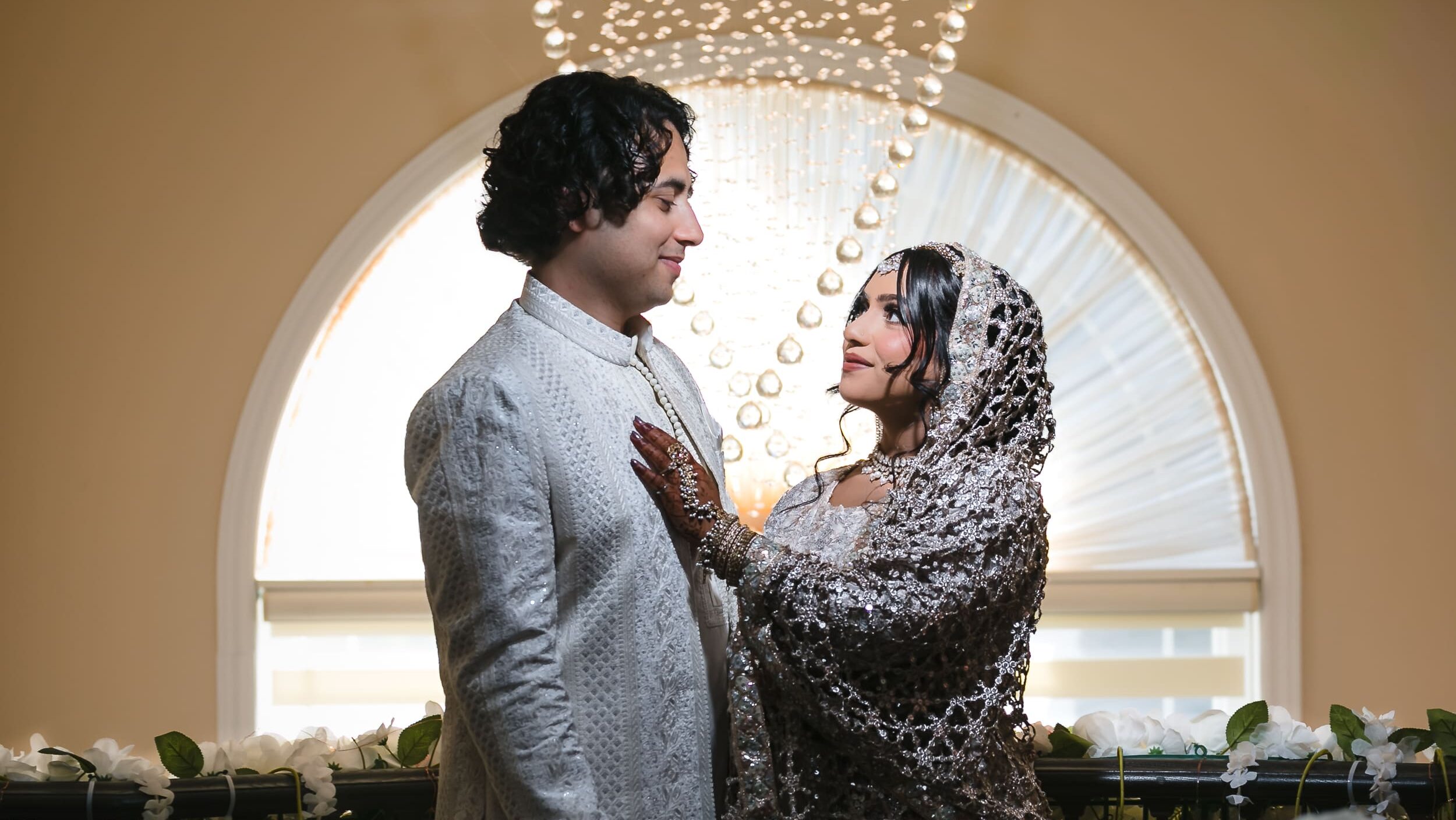
Your Nikah will be twenty-five to thirty minutes long, sometimes a little more.
If you’re wondering how to make sure those minutes actually get captured properly, you’re in the right place. For most couples, this is the part nobody warns them about.
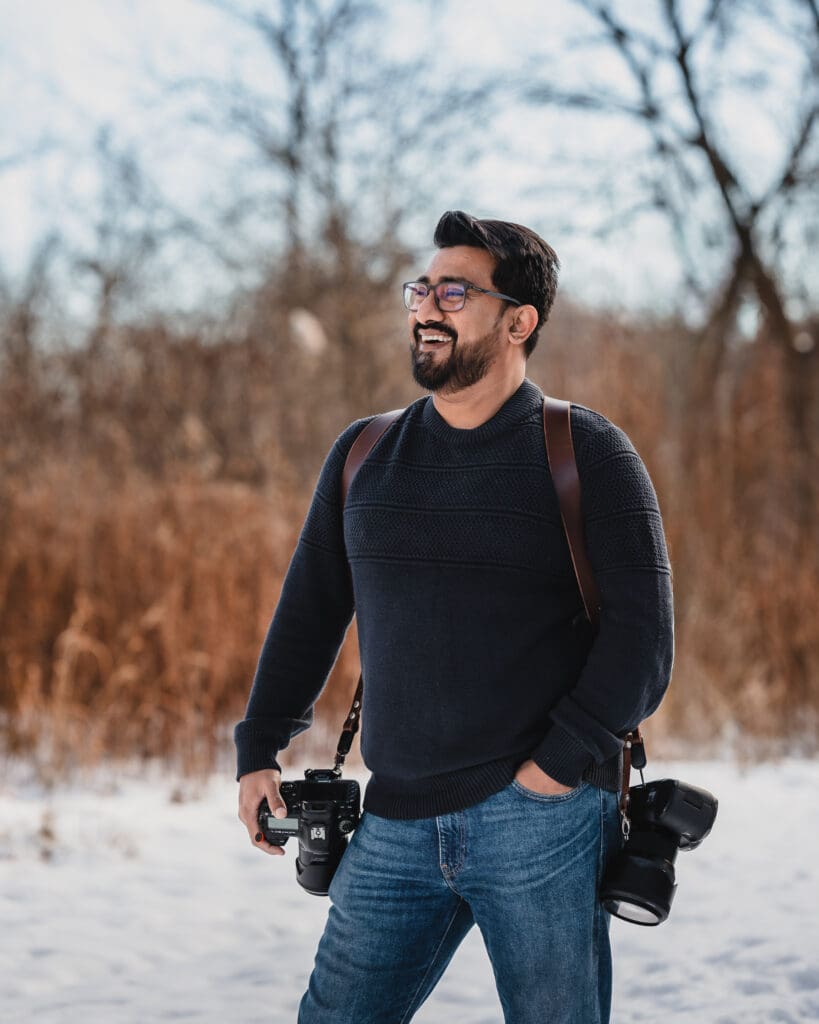
Hi, I’m Sayeed.
The photographer behind The Northern Love Chapter Photography. I photograph Nikah, Mehndi and Walima celebrations across Toronto and the GTA with an honest, cinematic approach.
Most couples spend more time picking their Walima outfit than they spend planning for this. And then they’re surprised when the one photo they actually wanted, the acceptance, the dua, their father’s face, almost got missed because nobody told the photographer when it was actually starting.
Here’s what tends to go wrong, and what actually works instead.
Before the Nikah Begins
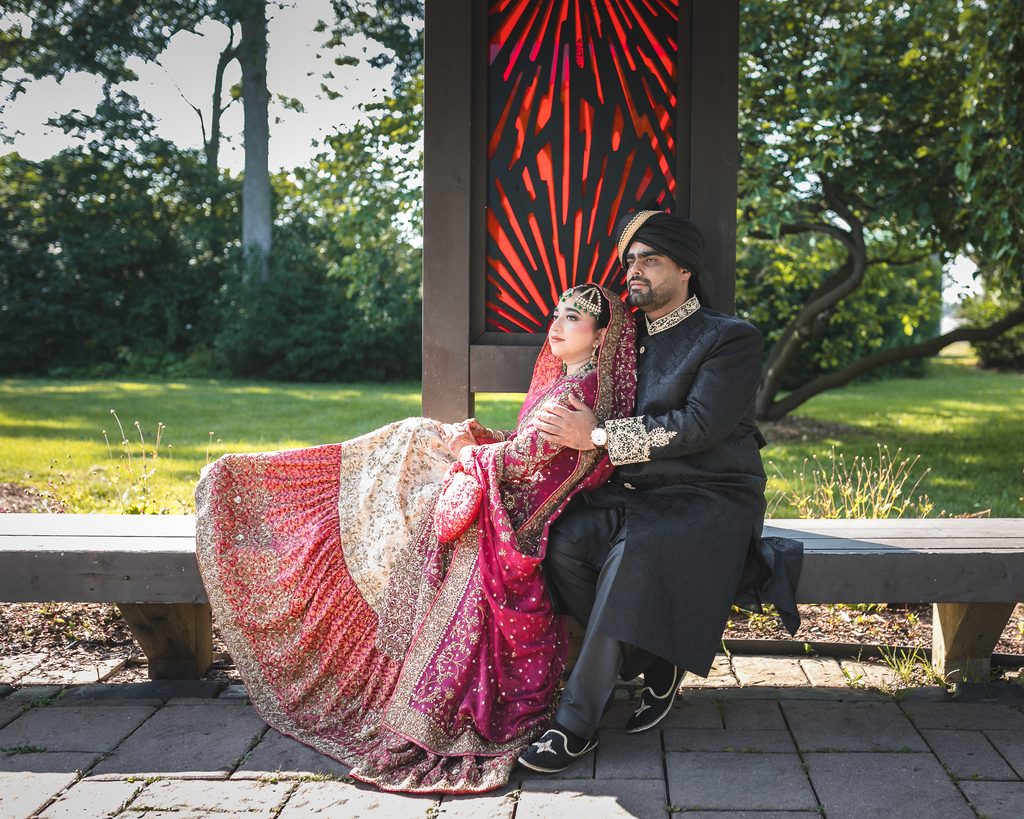
Couple portraits happen here, not after.
The instant your Qazi finishes the Ijab-o-Qubul, the room changes, mubarakan, embraces, forty uncles and aunties requesting a group photo, all within about ninety seconds. There is no quiet window waiting for you on the other side.
What tends to work best:
- unhurried couple portraits scheduled before the ceremony starts for at least 30 minutes
- a few minutes alone together, away from the getting-ready chaos
- confirming with your photographer exactly when the ceremony will start, so nothing is rushed
What to avoid:
- assuming you’ll grab portraits “after,” when the room is calmest
- treating the Nikah as the quick formality before the “real” event, it’s the one moment that can never be reshot
During the Ceremony
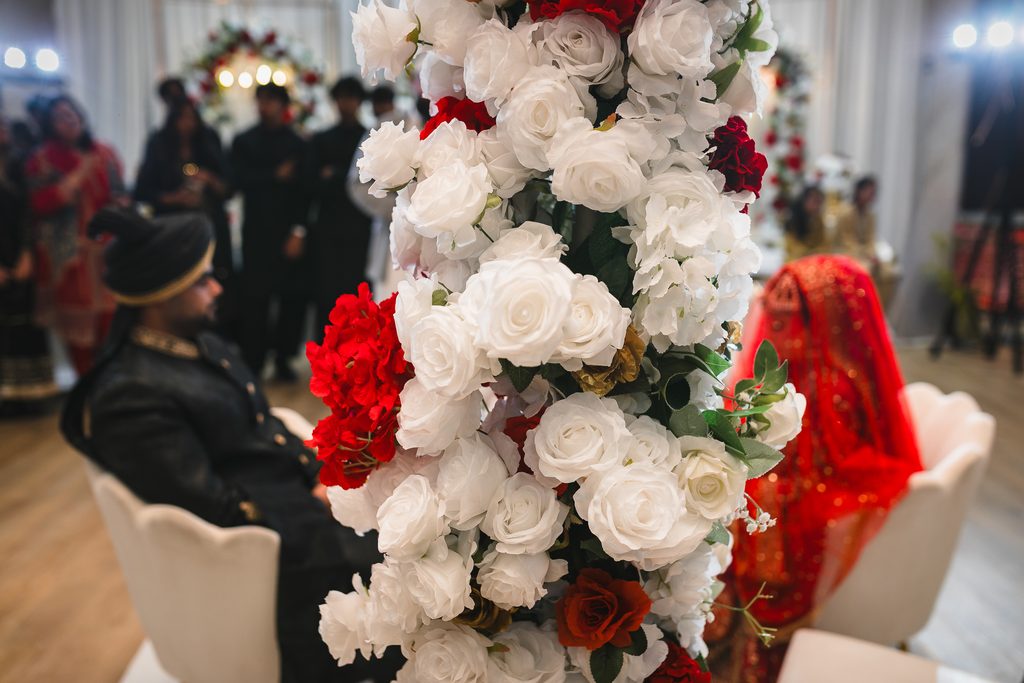
This is not a rehearsal. Ijab-o-Qubul happens once, live, with no second take.
Keep the Circle Wide
A single overenthusiastic uncle or cousin stepping into frame mid-vow for a better phone angle doesn’t just ruin one photo, it costs the videographer, the photographer, and every guest behind them the same irreplaceable second. Ask your family, warmly but firmly, ahead of time, to give the ceremony space room to breathe. The people who love you the most are usually the ones who need this reminder the most.
Walk In, On Purpose
Your walk toward the Nikah space deserves the same planning as your Walima. Decide the formation in advance, who walks beside you, who walks behind, and brief your MC to clear the aisle before you take a single step. An unplanned aisle, full of family “vloggers” leaning in for the perfect angle, is how your own entrance ends up photographed from behind someone’s phone.
The MC Makes or Breaks This
A confident MC does more for your photos than most couples realize, but charisma and crowd control are not the same skill and most families only interview for the first one. For the twenty-five to thirty minutes of Ijab-o-Qubul and Khutbah, someone in the room needs to be the designated, gentle “not right now”, steering children back to their seats, holding the crowd at a respectful distance, reminding everyone this is a ceremony, not a photo booth. When you’re hiring, ask directly whether they can do this, not just whether they can hype a room.
What tends to work best:
- briefing your family in advance to give the ceremony space room to breathe
- a planned formation for your walk toward the ceremony space, decided ahead of time
- an MC who is asked, directly, whether they can hold a room, not just host one
What to avoid:
- letting an overenthusiastic guest step into frame mid-vow for a phone angle, it costs everyone behind them the same irreplaceable second
- an unplanned aisle, where family “vloggers” end up photographing your own entrance from behind someone’s phone
- children running freely near the ceremony space, ask parents in advance to keep this managed
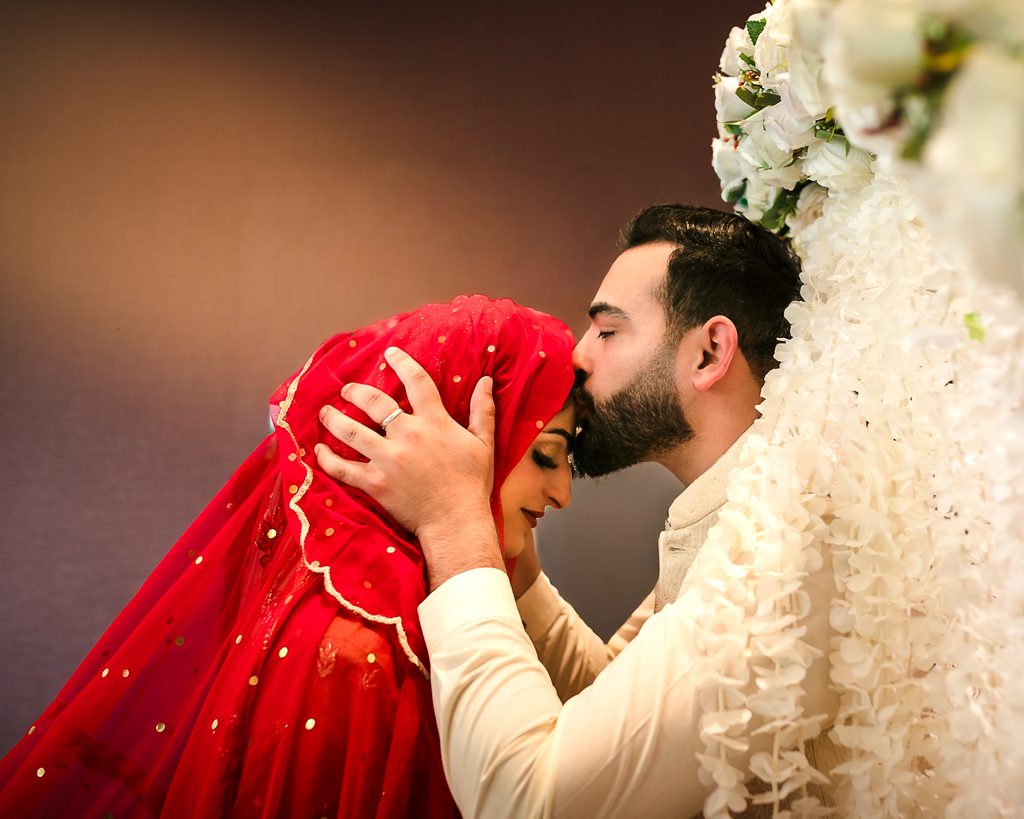
The Munh Dikhai (Face-Reveal)
This is the one that catches families off guard, because it doesn’t feel like a mistake in the moment, it feels like love.
Well-wishers who start congratulating the bride and groom before the Nikahnama is even signed don’t just crowd the frame, they can swallow the moment whole. I’ve watched grooms get pulled into hugs before they’ve even crossed the phoolon ki chaadar (flower curtain) toward the munh dikhai, left standing at the edge of it, surrounded, unable to do the one thing that was meant to be his and his wife’s alone.
What tends to work best:
- asking family, in advance, to hold every congratulation until the signing is fully complete and the munh dikhai has happened
- talking with your photographer beforehand about exactly how the crossing and unveiling will happen, so it’s protected, not improvised
What to avoid:
- letting the room’s excitement dictate the pace of a moment that lasts two seconds and happens once
The Nikahnama Signing
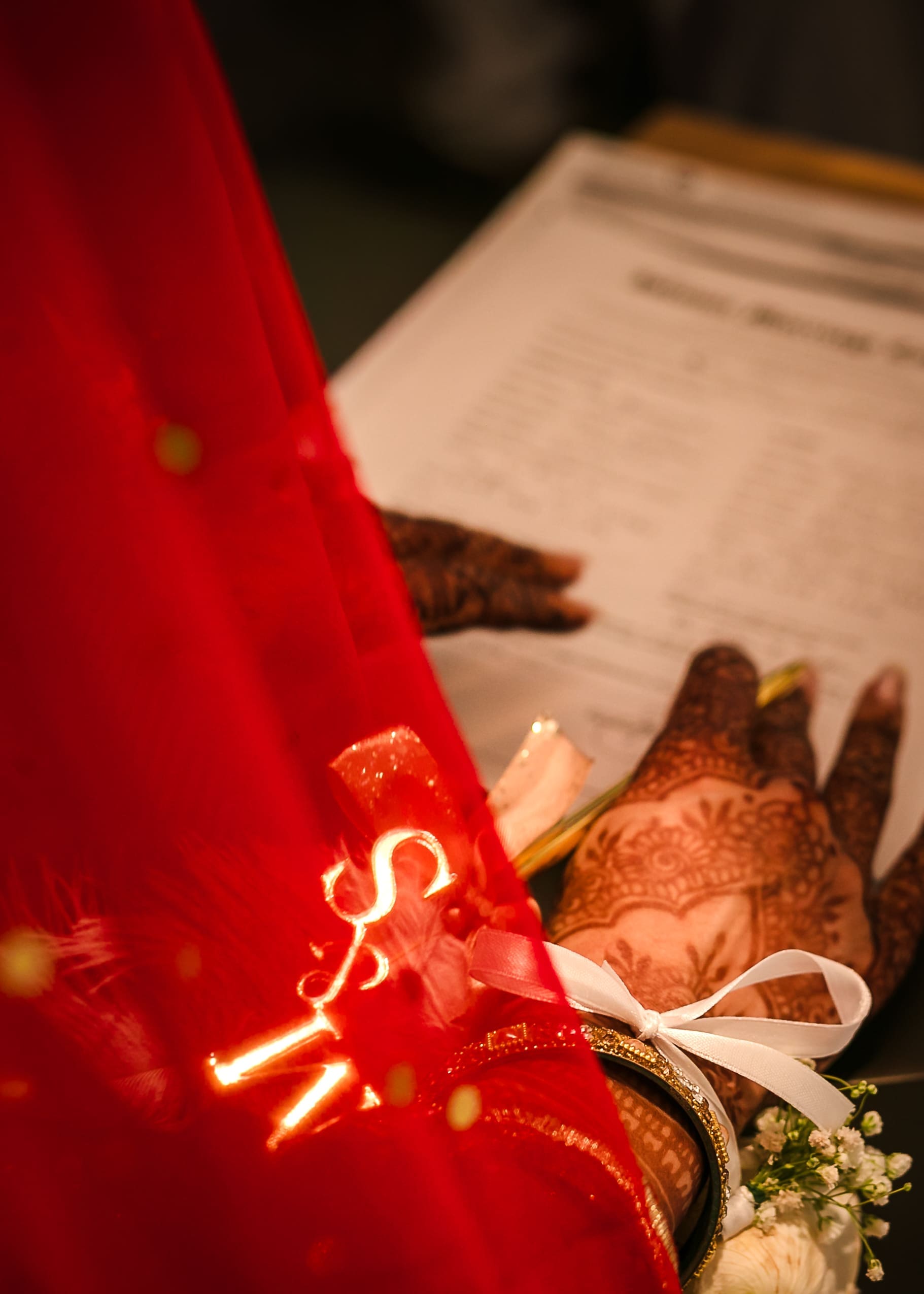
Families often don’t think to ask for this shot specifically, and then wish they had it later. The exact page, the exact signatures, this is your legal marriage record, and one of the most requested images months after the wedding, quietly, when someone wants to see it again.

Gender-Separated Ceremonies
Some families hold the Nikah with the bride and groom seated separately, often in two different rooms, connected only by the witnesses moving between them.
If your photographer doesn’t know this in advance, they can end up in the wrong room entirely, missing the exact reaction they were there to capture.
What tends to work best:
- telling your photographer about the seating arrangement well before the day, not the morning of
- arranging a female photographer for the women’s side, so nothing is missed and everyone in the room stays comfortable
- making sure both spaces are well lit and that each photographer is positioned in advance for the key moments, not scrambling to find an angle once things start
What to avoid:
- assuming your photographer already knows or will figure it out on the day
- leaving one side of the ceremony uncovered because it wasn’t planned for
Final Thought
You don’t need your Nikah to be perfectly choreographed.
You need it protected. Twenty-five minutes, maybe thirty, and then it’s gone, permanently, for you, for your family, for everyone who loves you enough to want to remember it exactly as it happened.
If you’re still planning your ceremony and want to talk through how the day will flow, take a look through my portfolio to see how different Nikah celebrations have come together, or let’s talk about your date.
FAQs
How long does a Nikah ceremony usually take?
Twenty-five to thirty minutes, sometimes a little longer depending on the family and Imam.
Do you photograph gender-separated Nikah ceremonies?
Yes. If it’s needed, I can arrange a female photographer for the women’s side, just let me know in advance so both rooms are covered.
How far in advance should we book a Nikah photographer in Toronto?
Nine to twelve months ahead for peak season, May through October.
Do you bring a second shooter for Nikah ceremonies?
Yes, especially for gender-separated ceremonies or larger families, so nothing is missed on either side.
Do you photograph Bengali as well as Pakistani and Indian Muslim weddings?
Yes. I’m Bangladeshi and grew up in a Muslim family, so I know the rhythm of these days firsthand.
Do you offer a consultation before the wedding?
Yes. I sit down with every couple for a one-hour consultation to plan the day in detail and advise on timing, flow, and anything specific to your ceremony.


